Expert Contributor
Abdalfatah Elhoshy, contributor at Connectively and founder of SmartRemoteGigs, works closely with remote operators, agencies, and growing businesses building operational systems around distributed teams, workflow automation, and human-led AI execution.
The AI Gold Rush Created a Bigger Operational Problem.
Over the last two years, most conversations around artificial intelligence have focused on speed. Agencies wanted faster content, founders wanted faster campaigns, and freelancers wanted faster execution. Large language models, automation tools, video repurposing systems, and prompt-driven workflows created the impression that production itself had become the competitive advantage.
But inside real businesses, a different pattern is emerging.
The companies seeing the strongest results are not necessarily the ones generating the most output. They are the ones building systems around that output, auditing what gets published, protecting brand consistency, and reducing operational mistakes before they reach clients.
According to expert contributor Abdalfatah Elhoshy, this shift is creating a new category of professional inside agencies and remote teams:
Human Oversight Is Becoming a Premium Service
One of the strongest operational shifts being observed in 2026 is the rise of human-in-the-loop execution.
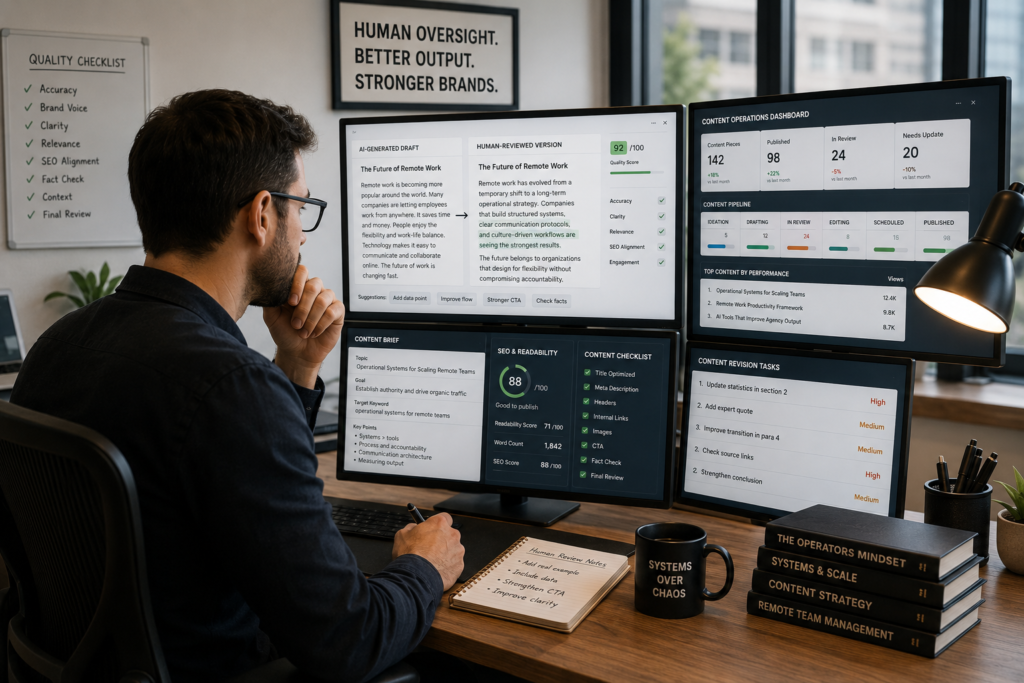
Instead of allowing raw AI output to move directly into client delivery, agencies are increasingly paying experienced operators to act as the final layer of quality control. This includes fact-checking, brand alignment, workflow validation, copyright review, and contextual refinement.
Based on field benchmarking shared by Abdalfatah, operators working in these roles are now commanding rates up to 40 percent higher than traditional freelance execution roles.
The reason is simple.
Unchecked AI output can damage trust. The same principle applies to authority building itself, where poorly placed backlinks and artificial PR signals often create short-term visibility but weak long-term trust.
For client-facing businesses, that risk is no longer acceptable.
Workflow Architecture Is Replacing Content Production
Another trend becoming impossible to ignore is the shift from output creation to workflow design.
In the early AI adoption cycle, many operators focused on individual tasks such as article generation, social media captions, email sequences, or short-form video production.
Today, the real value is moving elsewhere.
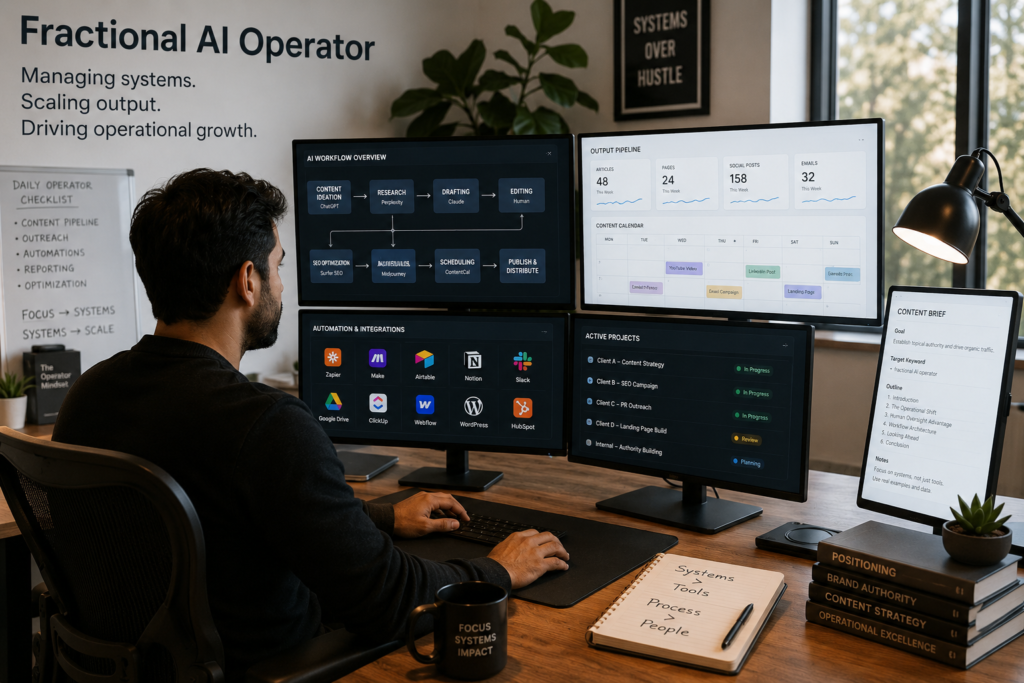
Operators are now building complete systems using tools such as:
- Zapier
- Custom GPT workflows
- Scheduling platforms
- Prompt libraries
- Semantic context systems
- Asset repurposing tools
According to operational data shared by Abdalfatah, solo operators who build these systems are reducing manual execution from more than 18 hours per week to under 3 hours.
That is no longer productivity but infrastructure.
Agencies Are Hiring Operators, Not Junior Teams
Smaller agencies are also changing how they scale.
Instead of hiring multiple junior content creators, video editors, or social media assistants, many are now hiring a single Fractional AI Operator capable of managing an entire technology stack.
This includes:
- Content workflows
- Video automation
- Prompt governance
- Asset creation pipelines
- Copyright safety
- Brand quality control
According to Abdalfatah, the shift is not about replacing people; it is about replacing unmanaged execution.
As he explains:
“The AI revolution didn’t replace freelancers. It replaced execution. The future belongs to the operator who can manage, audit, and direct systems with human judgment.”
That observation is increasingly becoming visible across agencies, SaaS teams, and independent operators worldwide.
Looking Ahead
As artificial intelligence moves beyond experimentation and into daily operations, competitive advantage is shifting away from tools and toward systems. Many of the same principles also apply to digital authority itself. Brands that build structured editorial systems tend to outperform brands chasing isolated wins, which is one of the core ideas behind Connectively’s Authority Engineering Framework™.
The businesses that win over the next decade may not be the ones generating the most content.
They may be the ones building the strongest operational architecture around it. Businesses that combine operational systems with long-term editorial authority are likely to hold a significant advantage over the next decade.
To learn more about remote workflows, operational systems, and distributed team execution, visit SmartRemoteGigs.
Authority Without Operational Trust Eventually Collapses
Modern brands grow through systems, positioning, editorial trust, and authority that compound over time.
Connectively.uk
Connectively builds digital authority for brands through real backlinks, trusted media placements, and strategic visibility — with transparency and results.
Links
Contact
info@connectively.uk
United Kingdom
Connectively is a UK-based digital authority agency serving brands worldwide.
© 2026 Connectively.uk — All rights reserved