
Why Companies Buy Editorial Backlinks
Backlinks remain one of the strongest signals used by search engines to evaluate credibility and authority. For companies competing in crowded markets—particularly B2B SaaS and high-growth startups—earning links organically can take years.
Because of this, many organizations choose to buy editorial backlinks as part of a strategic authority campaign.
However, the challenge is not the idea of purchasing placements itself. The challenge lies in understanding the difference between genuine editorial visibility and the low-quality link networks that dominate much of the industry.
Companies that misunderstand this distinction often invest heavily in backlinks that fail to strengthen authority and may even damage their long-term search performance.
Understanding how editorial backlinks actually work is essential before making that investment.
The Problem With Most “Editorial Link” Services
A large portion of the backlink marketplace is built on scale rather than credibility.
What are often marketed as editorial backlinks are frequently:
• Guest post networks
• Private blog networks (PBNs)
• Recycled domains with artificial authority
• Bulk placements on websites that publish sponsored content without editorial standards
While these links may temporarily influence rankings, search engines are increasingly capable of identifying patterns associated with large-scale link selling.
As a result, many companies discover months later that their expensive backlink campaigns produced little lasting authority.
True editorial backlinks operate under a very different model.
As we explored earlier, backlinks alone do not build authority when they lack credible editorial context.
What Real Editorial Backlinks Actually Look Like
A genuine editorial backlink appears naturally within a published article on a legitimate website or media platform.
Rather than being inserted purely for SEO, the link is included because the brand being referenced contributes context or expertise to the topic being discussed.
Real editorial placements typically have several characteristics:
• The article is written to inform readers rather than host links
• The brand mention appears naturally within the narrative
• The publication maintains editorial standards and the real readership
• The placement aligns with the subject matter of the article
Because of this context, editorial backlinks function as credibility signals for both readers and search engines.
They demonstrate that the brand has been referenced within legitimate industry discussions.
Understanding how editorial backlinks are secured helps brands differentiate between legitimate placements and large-scale link selling networks.
Editorial Backlinks vs Guest Posts
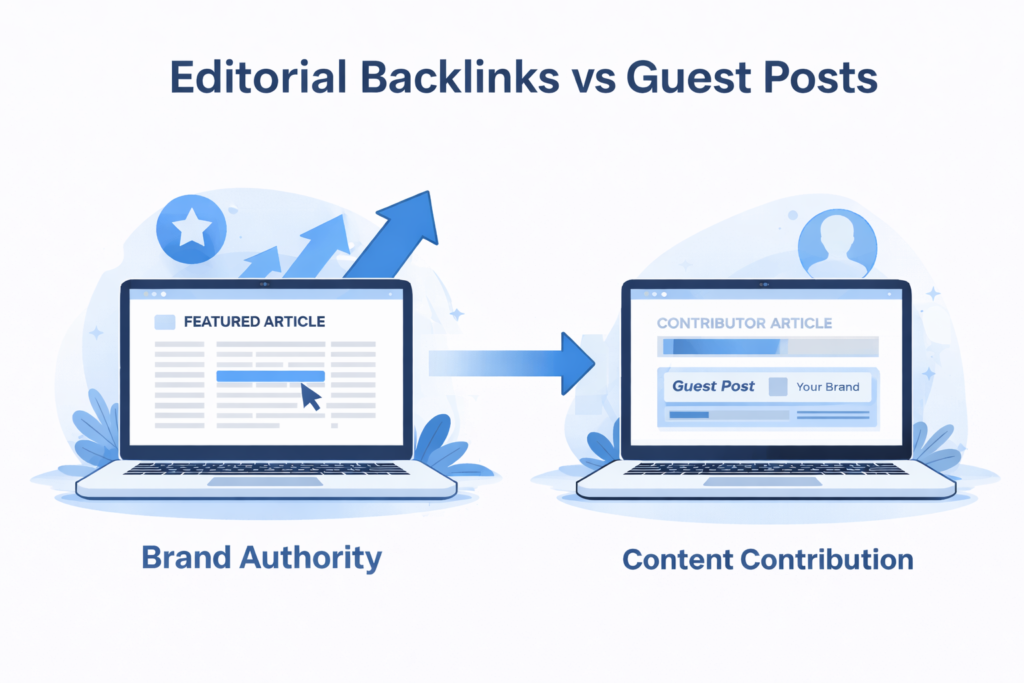
Many companies assume guest posting and editorial backlinks are the same. In reality, they serve very different purposes.
Guest posts are usually written directly by the brand or its agency and published as contributor content. While they can still provide SEO value, they rarely carry the same credibility as an editorial mention.
Editorial backlinks, by contrast, appear within independent articles written by journalists, editors, or publication contributors.
The difference is subtle but significant.
Guest posts demonstrate content contribution.
Editorial placements demonstrate brand authority.
For companies focused on long-term credibility, this distinction becomes extremely important.
When Buying Editorial Backlinks Makes Strategic Sense
While organic media coverage is always ideal, many companies accelerate authority building through strategic editorial placements.
This approach is particularly common among:
• Funded B2B SaaS companies
• Startups entering competitive markets
• Agencies establishing category expertise
• Brands preparing for product launches or investor visibility
In these situations, editorial backlinks function as structured credibility signals that strengthen both search visibility and brand perception.
The key is ensuring those placements occur within legitimate editorial environments.
Many brands combine editorial backlinks with strategic PR media placements to strengthen both search authority and public credibility.
How Connectively Approaches Editorial Authority
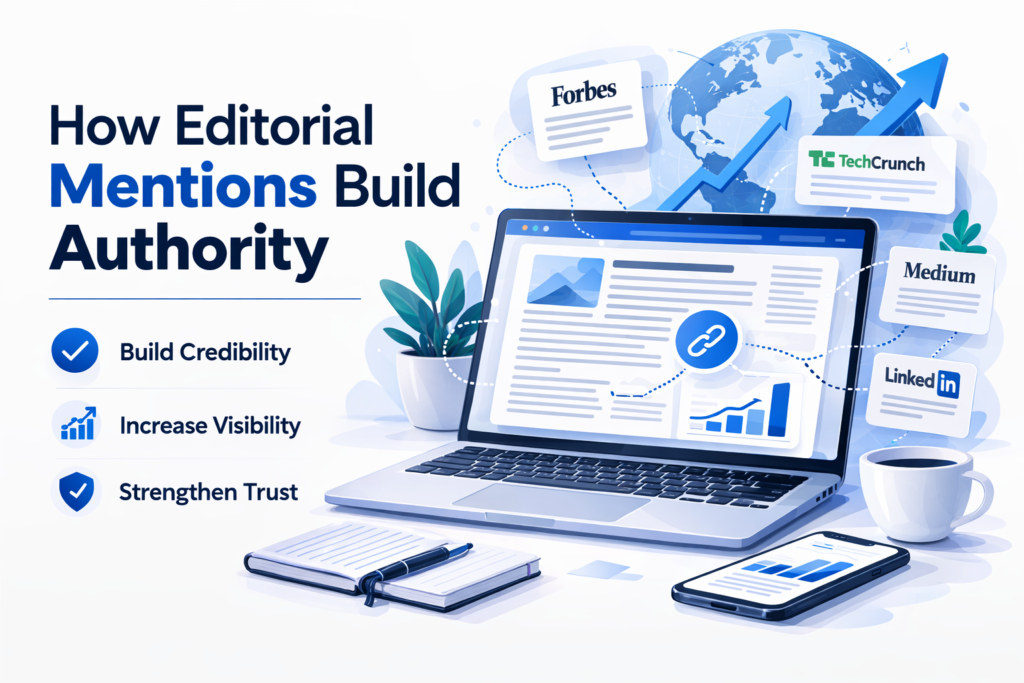
At Connectively, editorial backlinks are treated as part of a broader authority strategy rather than a standalone SEO tactic.
Our work focuses on placing brands within credible industry conversations through contextual mentions on real publications.
This process involves:
• Identifying relevant editorial environments
• Aligning brand narratives with publication topics
• Securing placements through trusted publishing relationships
The goal is not simply to acquire links, but to build durable credibility signals that compound over time.
Companies seeking structured visibility can explore our editorial backlink services designed specifically for brands building long-term authority.
For brands focused on long-term authority rather than short-term ranking manipulation, this distinction is critical.
To understand the broader strategy behind this approach, explore the Authority Engineering Framework™, which outlines how credibility signals combine to build durable brand authority.
Looking to build real authority through editorial visibility?
Secure Editorial Backlinks Through Trusted Publications, Contextual Relevance, and Long-Term Authority Positioning.
Connectively.uk
Connectively builds digital authority for brands through real backlinks, trusted media placements, and strategic visibility — with transparency and results.
Links
Contact
info@connectively.uk
United Kingdom
Connectively is a UK-based digital authority agency serving brands worldwide.
© 2026 Connectively.uk — All rights reserved